
Is Sushi On The Mediterranean Diet – Guide In 2026!
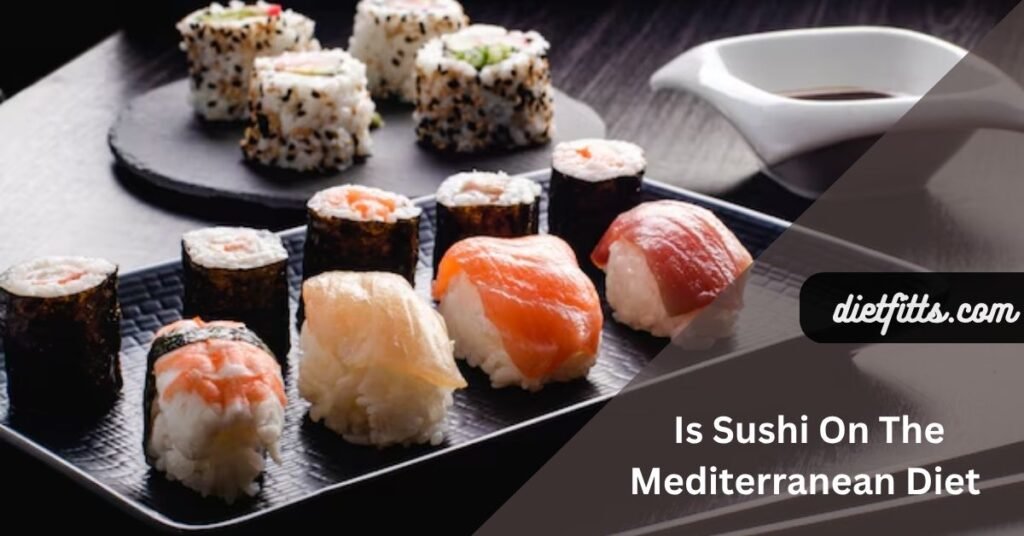
When we think of the Mediterranean diet, we usually picture fresh salads, olive oil-based dishes, and lots of seafood. But what about sushi, which comes from Japan? Can it be part of the Mediterranean diet?
Yes, Sushi can fit into a Mediterranean diet with smart choices like sashimi, brown rice rolls, and veggie options. Avoid fried foods, mayo sauces, and too much white rice. In moderation, it provides healthy protein and omega-3s.
NOT ONLY THIS, there is a lot more that you need to know about “Is Sushi On The Mediterranean Diet”. So, let’s get started!
Table of Contents:
What Is Sushi? – A Closer Look!
1. Brief Overview:
In the past, Brits preferred sausages over raw fish, but now sushi is popular in many supermarket meal deals. People perceive sushi as healthy, especially compared to regular sandwiches, and it’s associated with a healthy Japanese diet. However, the sushi we eat in the UK isn’t always as healthy as we think.
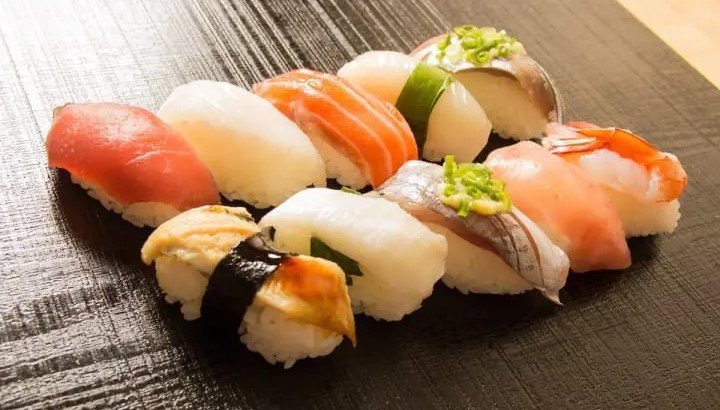
Sushi typically consists of vinegared rice and various ingredients, including raw or cooked seafood, vegetables, and sometimes tropical fruits. Traditional sushi rolls, known as maki, often contain fish like tuna, salmon, or mackerel.
2. Healthy Aspects Of Sushi:
Sushi with oily fish provides healthy omega-3 fats, which are beneficial for health. Some types of sushi also contain vegetables, though not always enough to count as a full serving of your daily intake.
3. Not-So-Good Parts Of Sushi:
Be careful with the salt, especially if you add soy sauce. If you’re having it at home or work, consider using a lower-salt soy sauce and only using a little. Pre-packed sushi can contain high levels of sugar due to the sushi vinegar used in preparation.
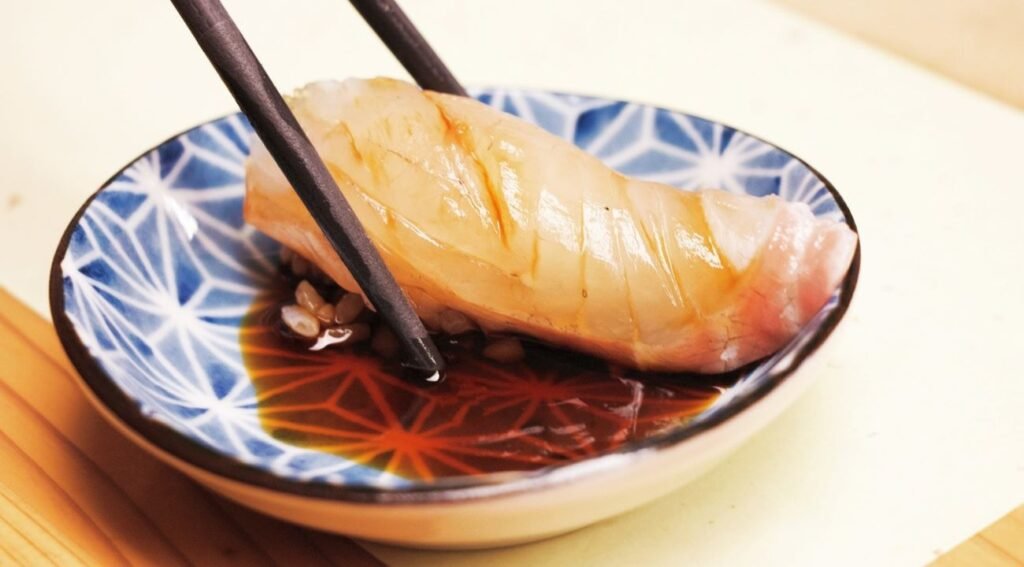
Japanese people often prefer sashimi, just raw fish without rice, which is considered healthier than sushi rolls typically consumed in the UK.
4. Overall, Sushi Can Be A Healthy Choice:
Check the label to understand the nutritional content, including energy, sugar, and salt levels. Making sushi at home allows you to control the ingredients, ensuring a healthier option with your preferred rice and vegetables.
Here you go, you have learned about sushi. Now I am sharing some tips for incorporating sushi into your diet. For more information, visit this forum website.
Key Components of the Mediterranean Diet vs. Sushi – Let’s Explore!
Both the Mediterranean diet and sushi emphasize fish, especially omega-3-rich varieties like salmon and tuna. However, they differ in the grains used and the amount of vegetables. Let’s look at these differences.
Fish and Seafood: A Shared Focus
Both diets focus on fish and seafood. The Mediterranean diet includes fish like sardines, anchovies, and mackerel, which are high in omega-3 fatty acids and good for heart health.
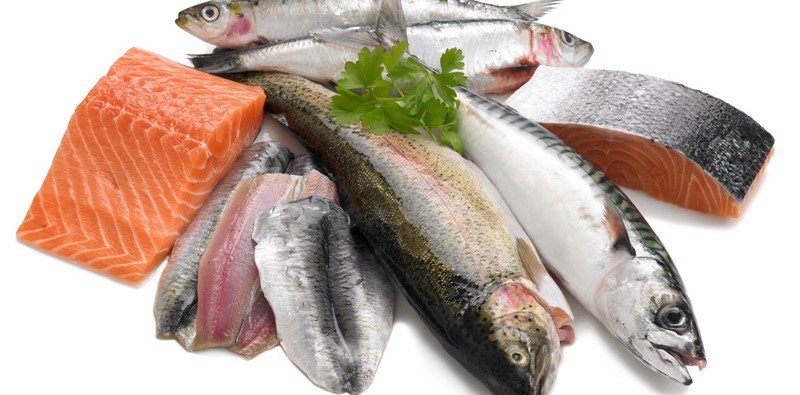
Sushi often uses salmon, tuna, and yellowtail, which are also rich in omega-3s, making them a great match for the Mediterranean diet.
Rice: The Key Difference
Sushi usually uses white rice. The Mediterranean diet prefers whole grains like brown rice, quinoa, and barley because they are higher in fiber and nutrients. To make sushi fit the Mediterranean diet, you can easily swap white rice for brown rice or quinoa.
Read Also: Is The Mediterranean Diet Good For Weight Loss – What To Expect!
Vegetables and Seaweed: A Mediterranean Connection
Sushi often features vegetables like avocado, cucumber, and pickled radishes, which fit with the Mediterranean diet’s focus on vegetables. Seaweed (nori) in sushi is also full of iodine, fiber, and antioxidants, just like the plant-based foods in the Mediterranean diet.
Mediterranean-Friendly Sushi Choices – Tips For You!
Healthy Options:
| Option | Explanation |
| Sashimi | Pure fish with no rice is a great choice. |
| Brown Rice/Quinoa Rolls | Choose whole grains instead of white rice. |
| Veggies & Fish | Go for rolls with cucumber, avocado, tuna, salmon, or mackerel. |
| Cucumber Wrap | Try Naruto-style rolls with cucumber wraps to avoid white rice. |
Items to Avoid or Limit:
| Option | Explanation |
| Tempura/Fried Rolls | These are high in unhealthy fats. |
| Cream Cheese & Mayo | These have a lot of saturated fat. |
| White Rice | Often used in large amounts in traditional rolls. |
Note: Sushi can be part of a Mediterranean diet if you go for sashimi, brown rice sushi, and lots of vegetables. I suggest avoiding tempura or mayonnaise, as they would make your sushi unhealthy.
Types of Sushi – Have A Look!
1. Nigiri:
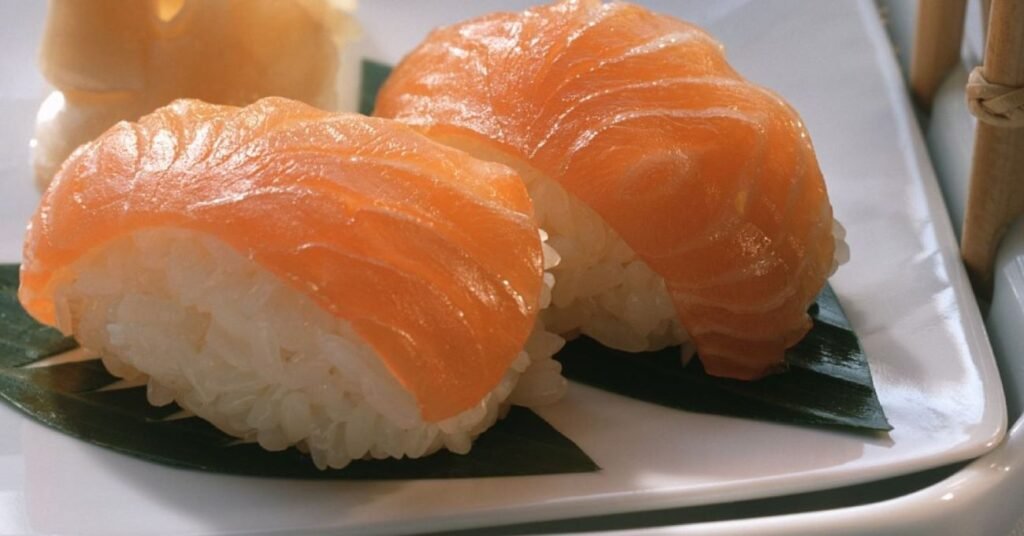
Nigiri sushi consists of rice topped with a slice of fish or seafood. The fish can be raw, fermented, or cooked, like eel or shrimp. The term “nigiri” means “hand-pressed” in Japanese, indicating that the rice is molded by hand and the fish is placed on top.
Read Also: Mediterranean Diet No Fish – Transform Your Eating Habits!
Occasionally, a small amount of wasabi is placed between the fish and rice. The stickiness of the rice helps hold the fish in place.
2. Maki:
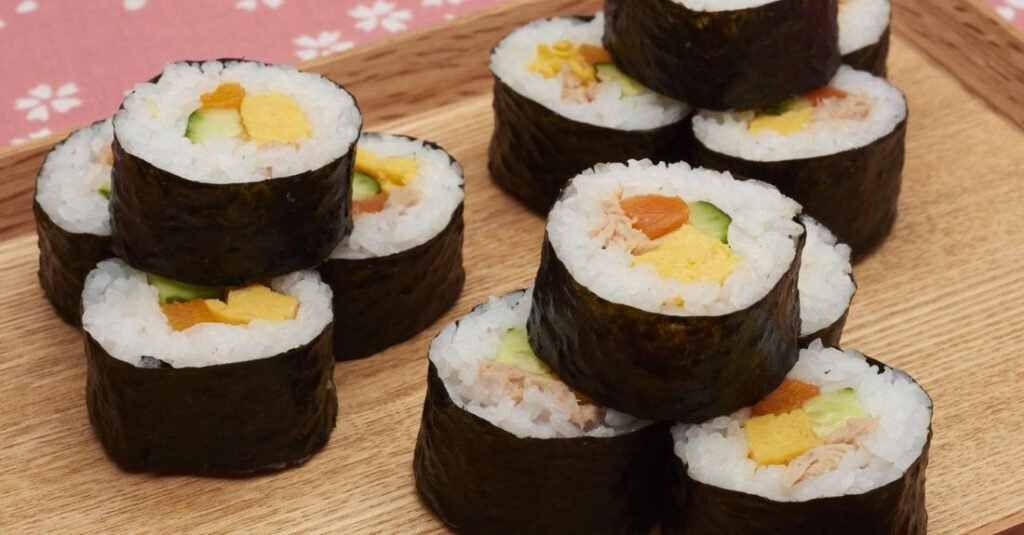
Maki sushi is made by rolling rice and fish in a sheet of seaweed called nori. There are different types of maki:
- Maki-zushi:
This type is shaped like a cylinder, with nori wrapped around rice and various fillings like raw fish, cooked shellfish, vegetables, or even cream cheese. The cylinder is then sliced into bite-sized pieces.
- Ura-maki:
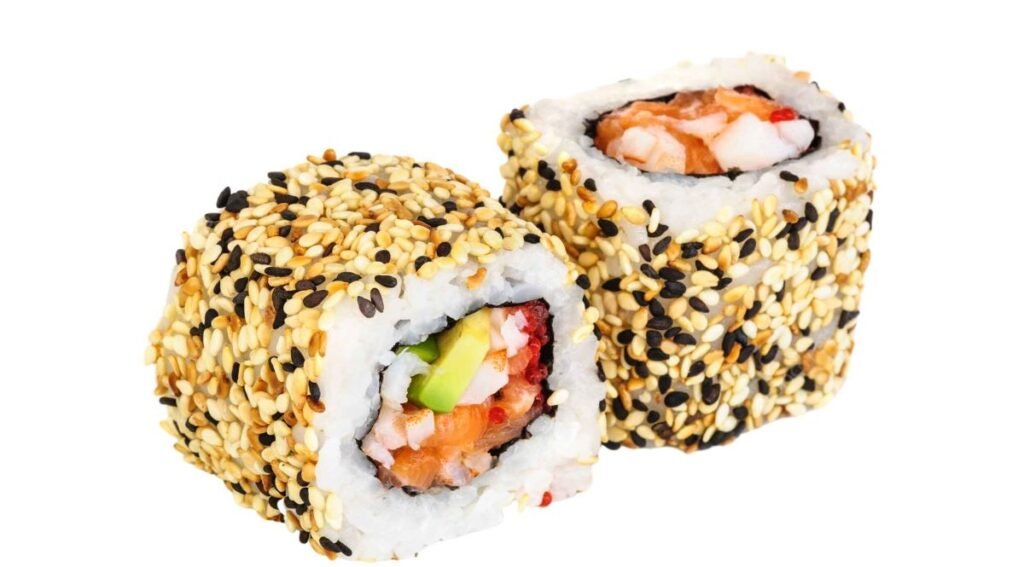
In this variation, the rice is on the outside, and the seaweed and fillings are on the inside. Ura-maki is also called inside-out roll.
3. Temaki Sushi:
Temaki, also known as hand rolls, are made by rolling nori into a cone-like shape, with fillings inside, resembling a large ice cream cone. Unlike other sushi types where nori wraps tightly around the rice and fillings, temaki has a looser, cone-shaped structure.

4. Uni Sushi:
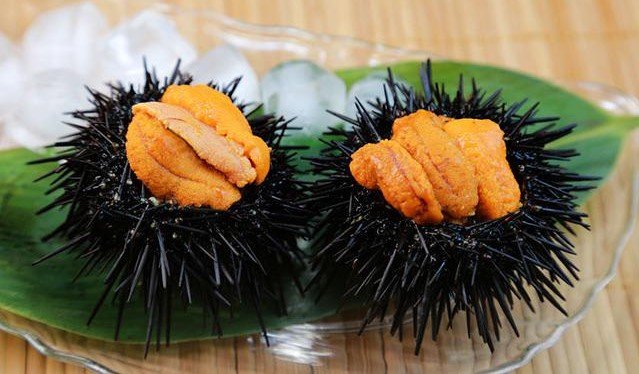
It is one of the most unique types of sushi. Uni refers to the sex organs of sea urchins. It has a tongue-like shape, a sweet taste, and a slightly sticky texture. Due to the labour-intensive harvesting process, uni sushi can be pricey.
Frequently Asked Questions:
1. Is sushi good for heart failure?
Yes, sushi can help with heart health and circulation. Omega-3 fatty acids help reduce inflammation, lower blood pressure, and lower the chances of heart disease. So, adding sushi to your diet can be good for your heart and circulation.
2. What types of sushi are compatible with the Mediterranean diet?
Sushi with omega-3-rich fish like salmon, mackerel, or tuna is compatible with the Mediterranean diet. Rolls with vegetables, whole grains, and healthy fats such as avocado also fit well with this eating pattern.
3. How can I modify sushi to fit the Mediterranean diet?
To make sushi Mediterranean-friendly, use whole-grain rice, lean proteins like fish, and lots of veggies. Avoid high-salt or high-sugar sauces, and add Mediterranean herbs and spices for flavour.
Conclusion:
Sushi can be adapted to meet the requirements of a Mediterranean diet by selecting appropriate ingredients. Select fish varieties that have an abundance of omega-3 fatty acids, such as salmon and tuna. Brown rice and quinoa can be used in place of white rice, and plenty of vegetables should be included. Sushi rolls should not be fried, and mayonnaise and salty sauces must be avoided.

Hi! I’m Olivia Steeve, a certified nutritionist with over 11 years of experience in the field of diet and nutrition. At DietFitts, I focus on providing scientifically-backed, practical advice to help individuals achieve their health and fitness goals through balanced eating. I share insights, tips, and personalized guidance to help you make healthier choices and live your best life.





Howdy! I could have sworn I’ve visited this site before but after going through
some of the posts I realized it’s new to me. Regardless, I’m definitely pleased I discovered it and
I’ll be bookmarking it and checking back regularly!
Howdy! I’m really glad you found the site and liked it. Thanks a lot for bookmarking—hope to see you back here soon!
This is more than just content — it’s nourishment for the heart and mind.
thankue..